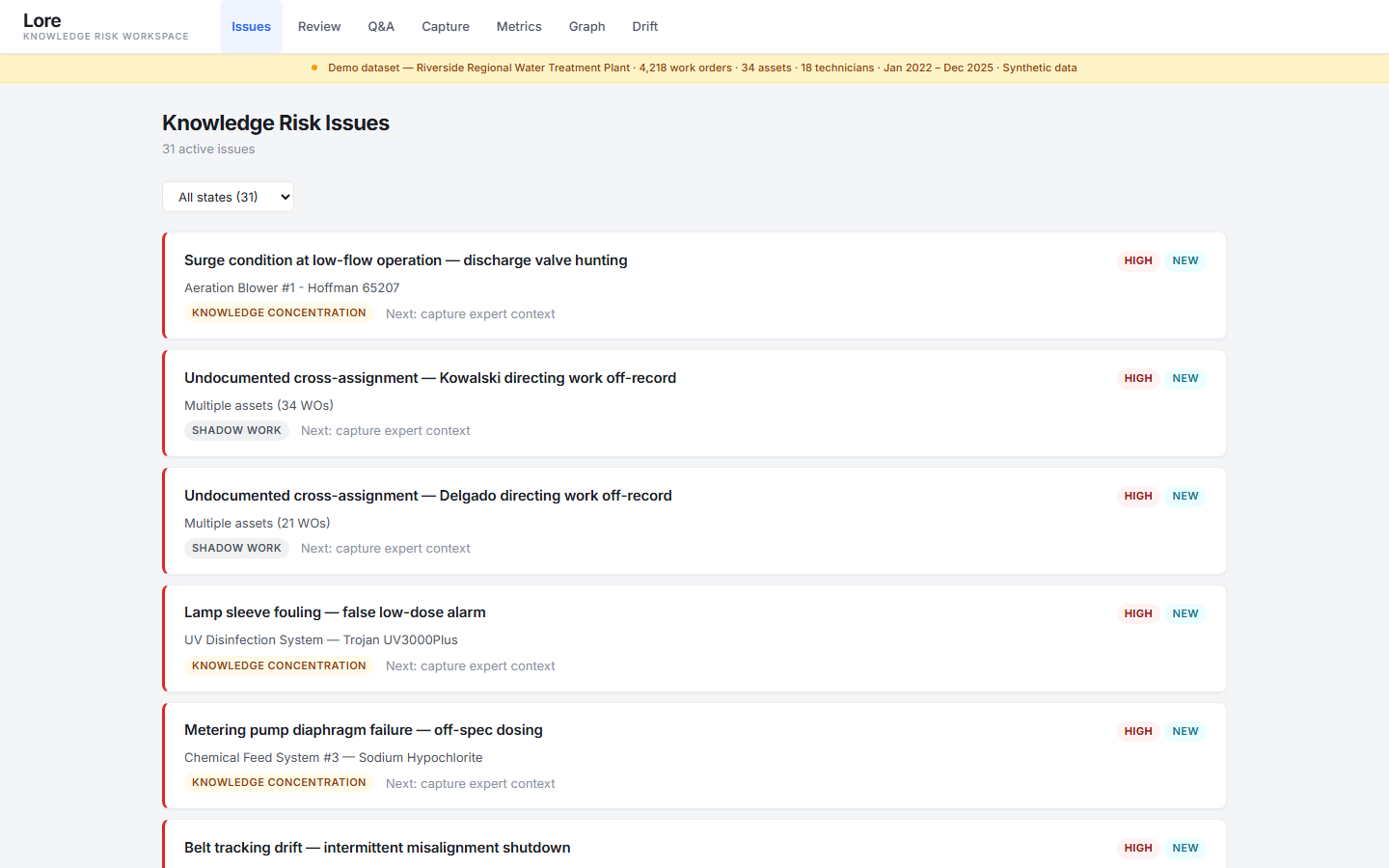
Prioritized issue board
Tenuris ingests a CMMS export and surfaces knowledge risks ranked by severity. Each card shows the failure mode, asset, risk type, and the recommended next step.
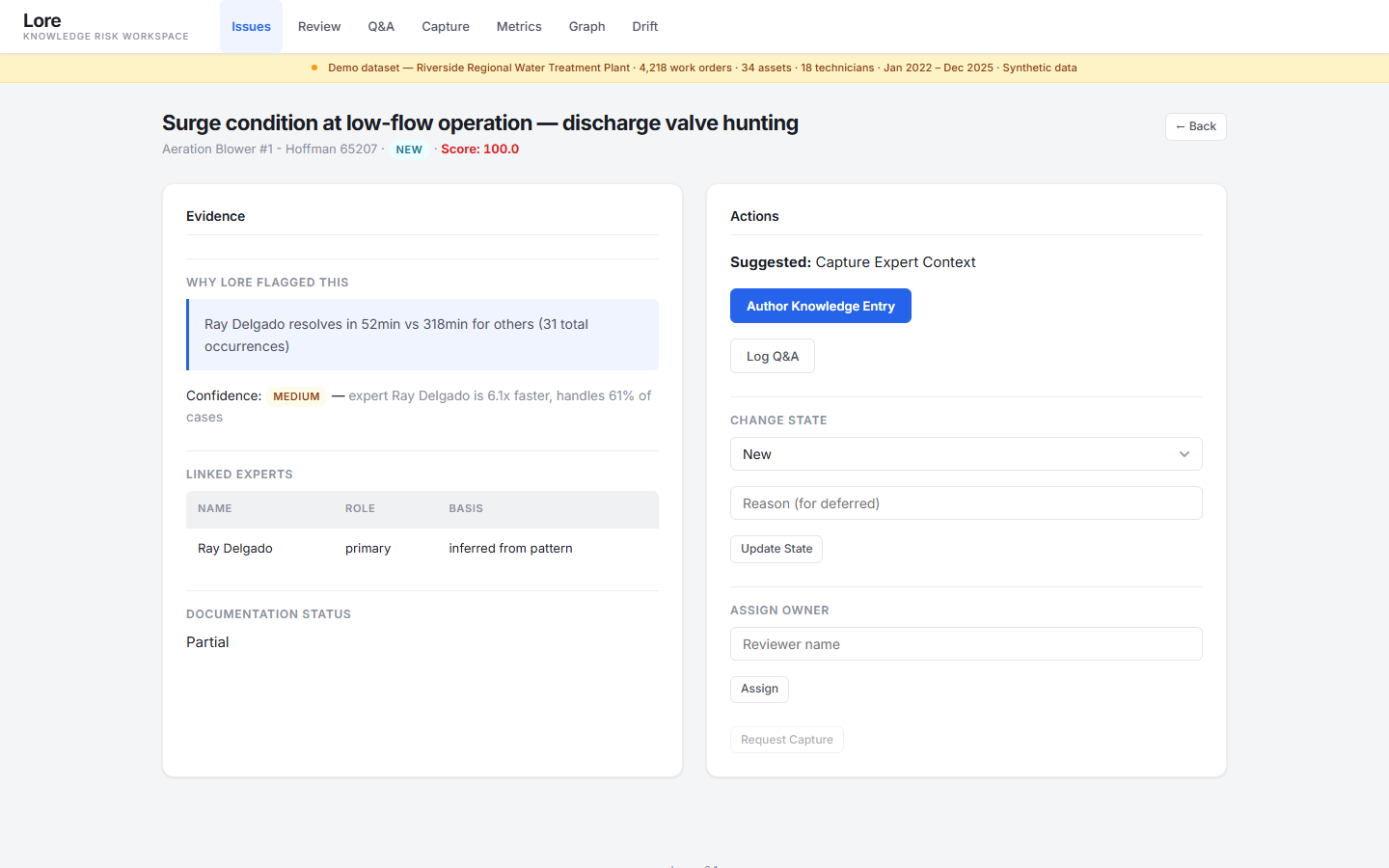
Evidence and actions on every issue
Click into any issue to see why Tenuris flagged it: which expert, how much faster they resolve, confidence level, linked work orders. The action panel suggests what to do next.
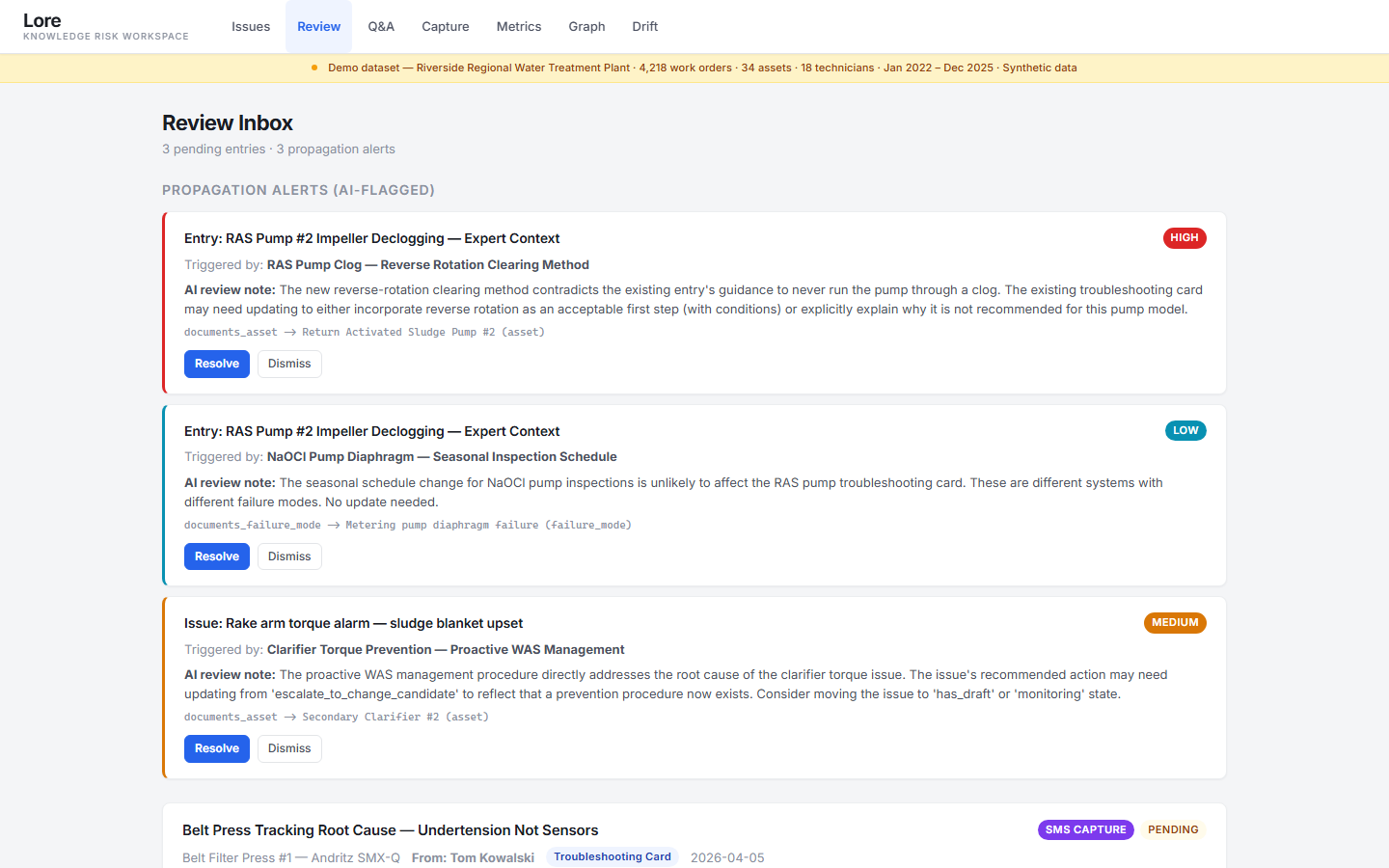
Reviewer governance
Nothing becomes operational guidance without human sign-off. Propagation alerts flag contradictions. Pending entries show AI-structured drafts ready for approval, edit, or rejection.
Leadership health metrics
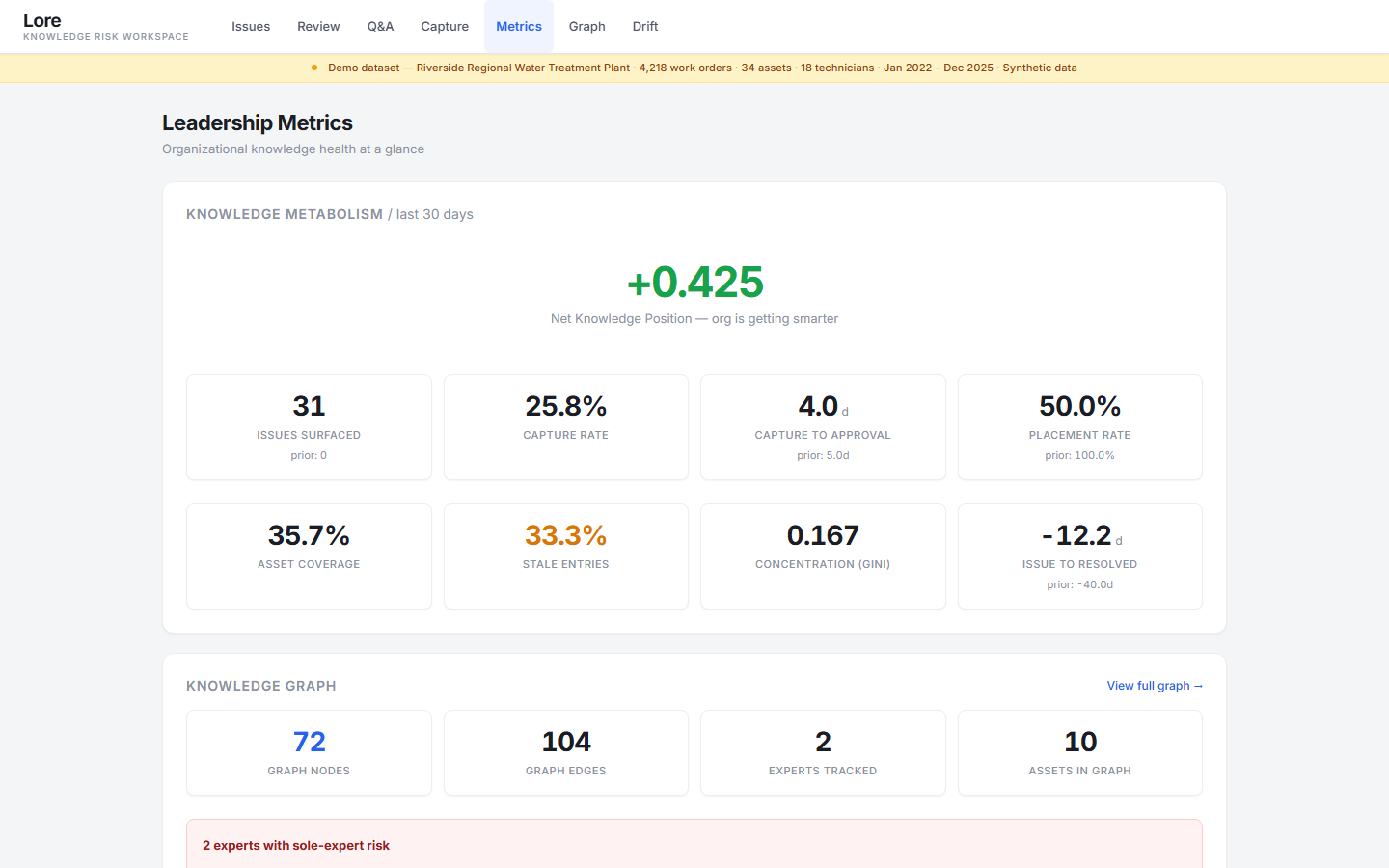
Is the organization getting smarter or leaking knowledge? Net knowledge position, capture rate, governance throughput, placement rate, staleness, and expert concentration — one view.
Knowledge graph
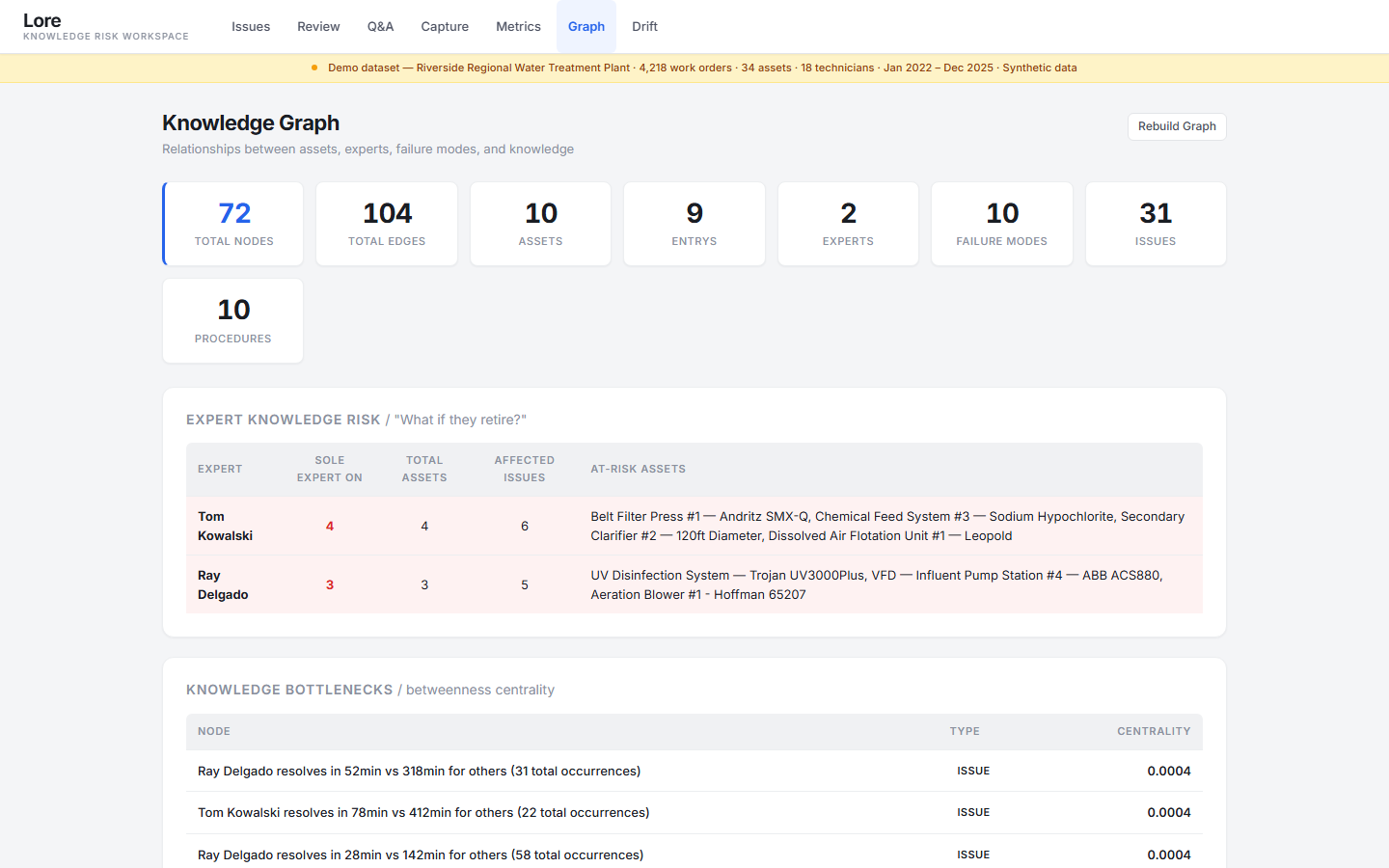
Assets, experts, failure modes, issues, and entries connected in a relationship structure. The headline: who holds concentrated knowledge, and what breaks if they leave?
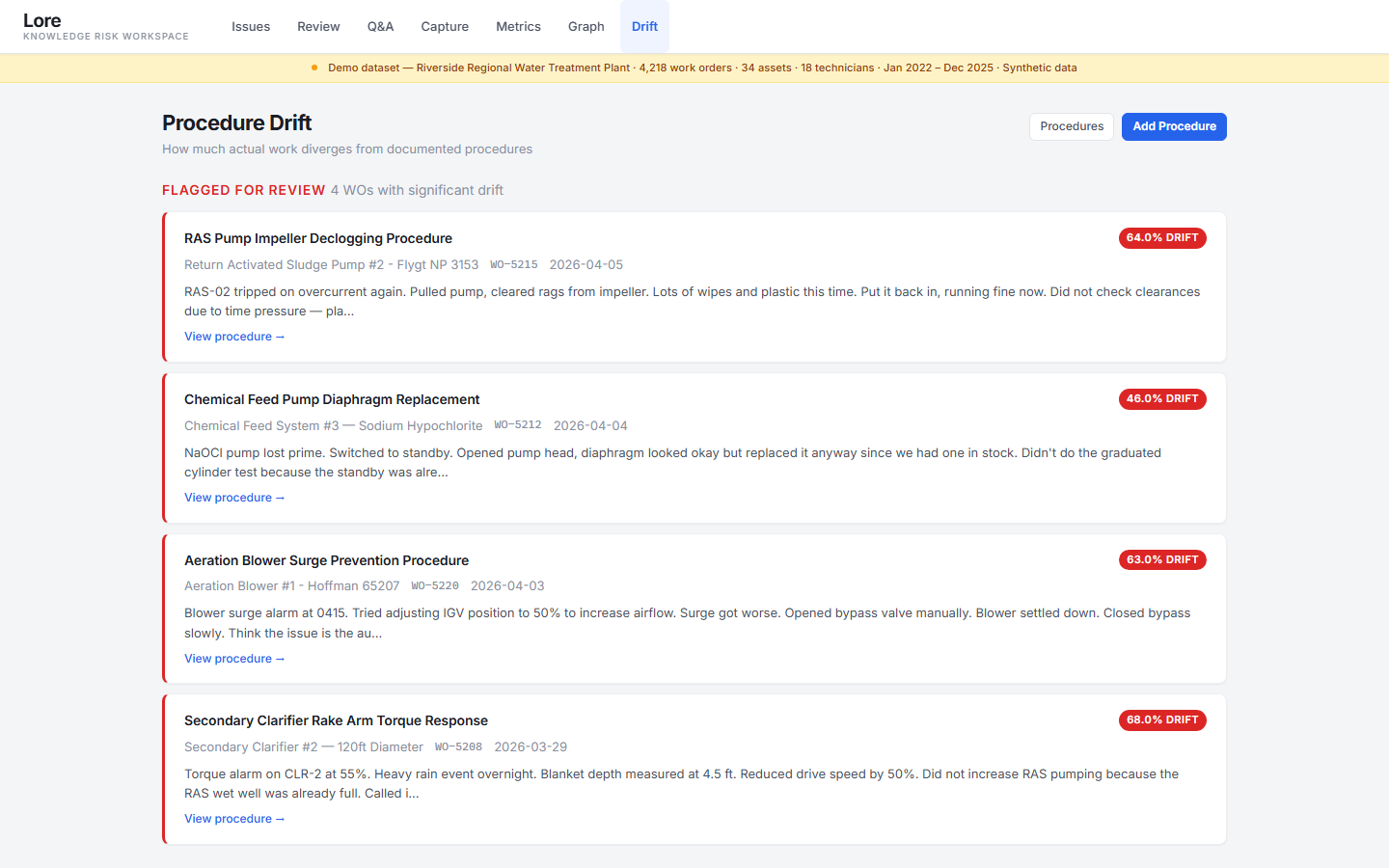
Practice vs. procedure
When technicians describe what they actually did in work orders, Tenuris compares it to the documented procedure. Drift percentages flag where the field story and the book diverge.